This is a timely article sent to us by a caring Christian. Click on the TITLE to link to the original source : GO Eagles.com
Read the Scripture: 1 John 3:6-7
It is my great hope that there is coming to all, as we study together in First John, a growing awareness that every Christian must be a revolutionary because Christ is a revolutionary. God does not like the status quo. He is grieved and hurt by racial hatred, by war, by poverty, by unhappy homes, by human strife. God is a revolutionist: he is determined to protest these conditions, whenever and wherever they occur. But more than that, he is determined to correct them, to deliver men from them. Speaking generally, it would not be wrong to say that God is in full sympathy with most of the goals of the radical groups that exist today. He sees clearly the same things against which they are protesting. But there are two things that mark the difference between God's revolutionary methods and those of the radicals:
First, God thoroughly understands and identifies the underlying cause of these problems. He names it for us. We saw it last time in Verse 4 of Chapter 3 of First John: Lawlessness! That is the problem: a revolt against reality. It is not economic distress, it is not class warfare, it is not pressure politics behind the problem of human strife and unrest. All of these are symptoms of an underlying cause. The underlying cause is, simply, man rebelling against the laws of his own being. That is the problem. It is civil war in the heart of every man, both that of the radical as well as the respectable. In other words, men have already caught the disease they are trying so desperately to cure.
The second thing that marks the difference in God's approach to these problems is that he has, himself, already done the only thing that can be done to correct this. In the mystery of the cross and the resurrection of Jesus Christ, he has provided a means by which to break the grip of this lawless principle upon human beings, and to permit us to become gripped, instead, by the more powerful principle of love -- and all this done in the person of Jesus Christ, his Son. This is what John declares to us in the verse we looked at in our last study,
You know that he appeared to take away sins[or lawlessness], and in him there is no lawlessness. (1 John 3:5 RSV)
Well, what is in him, if there is no lawlessness? Obviously, the trouble with us is lawlessness. We do not like something, and so we do not do it. Even though it is the right thing to do, even though we know it is for our best interests, if we do not like it, we do not do it. So we are lawless, whether we are respectable in other areas, or radical. This is the problem. But "in him there is no lawlessness." Well, what is in him? Love. In him there is love. We have learned in Romans that love is the fulfilling of the Law, that when someone acts in genuine love he fulfills all the Law there is to be fulfilled. This explains the link between love and righteousness. Here is another one of the great terms of the gospel, righteousness. Anyone who fulfills the Law is righteous, and since love is the fulfilling of the Law, therefore, righteousness is love behaving. That is all it is.
We have already learned many times in our studies together that love is the very being of God, the essence of his nature, and thus of the nature of Christ. John says, God is love. Yet that life which is love, is also light. It illuminates, it clarifies, it dispels darkness, it breaks through our confusion and our lack of understanding and makes us see things as they are. We read of the Lord Jesus, "in him was life, and the life was the light of men," (John 1:4 RSV). So, with this threefold gift of love, of light, and of life, when Christ enters a human heart he destroys lawlessness. Lawlessness is the destruction of life, the extinguishing of light, and the violation of love. Now what could be simpler, as a solution to the problems of life than that? That strikes at the very heart of discord. That is why, as we saw last, the gospel is the greatest revolution of all times, the revolution that occurs at the deepest level of the human heart and life.
Now the great question is, "How do we lay hold of this threefold gift in actual daily practice?" How does the gift of love from Christ destroy and push out the lawlessness of our lives? In what way does it happen? We have seen it all before, but John now beautifully summarizes it for us in Verses 6 and 7 of Chapter 3:
No one who abides in him sins; no one who sins has either seen him or known him. Little children, let no one deceive you. He who does right is righteous, as he[Christ] is righteous. (1 John 3:6-7 RSV)
Here is the mystery of righteousness. John does not call it that, but Paul refers to it as "the mystery of God-likeness, or godliness" (1 Timothy 3:16 KJV), i.e., the way by which a man or a woman, or a boy or a girl, begins to live like God, to become God-like though remaining a man. To become God-like in his attitudes, his outlook, his actions and his reactions. If you read the Old Testament, you know that certain men of olden times discovered this secret. They became, to a great extent, God-like, they lived like God. Abraham, for instance, Joseph, Moses, King David, and others. They became stabilized, outgoing, love-oriented, they became men in every true sense of the word.
The secret was hidden to most. Actually, of course, it has always been the same secret, it was Christ in them. That is forever the secret of God-likeness. But no one understood that in the Old Testament days, they could not because it had not yet become historically evident. But now, Paul says (and John and Peter and others), the mystery has been made clear. Paul calls this, in Colossians, "the mystery hidden for ages and generations but now made manifest to his saints," Colossians 1:26 RSV). Let me share with you the full passage in which that occurs, as it is found in Phillips' translation.
I am a minister of the church, by divine commission, a commission granted to me for your benefit, and for a special purpose: that I might fully declare God's Word -- that sacred mystery which up till now has been hidden in every age and every generation, but which is now as clear as daylight to those who love God. They are those to whom God has planned to give a vision of the full wonder and splendor of his secret plan for the nations. (Colossians 1:25-27a J. B. Phillips)
Did you hear that? God has a secret plan for the nations. That is at once the explanation of, and the remedy for, all the evil that exists in the human race. Now he goes on,
And the secret is simply this: Christ in you! Yes, Christ in you, bringing with him the hope of all the glorious things to come. (Colossians 1:27b J. B. Phillips)
Now those are not just so many beautiful words. That is a very practical proposition which God is working out through human history, and is making available to men. Peter says the same thing in other words, in his second letter (the Living Letters translation):
For as you know Him better[i.e., Christ], He will give you through His great power, everything you need for living a truly good life: He even shares His own glory and His own goodness with us! And by that same mighty power He has given us all the other rich and wonderful blessings He promised; for instance, the promise to save us from the lust and rottenness all around us, and to give us His own character. (2 Peter 1:3-4 Living Letters)
That is the Good News. John puts it bluntly and plainly, "No one who abides in him sins." Or, to use the interchangeable term for sin which he has just given us, "No one who abides in him lives lawlessly."
Perhaps some will say, "Now, wait a minute! Isn't this a contradiction? In the first chapter, Verse 8, John says, 'If we say we have no sin, we deceive ourselves, and the truth is not in us.' And now, in Chapter 3, he says, 'No one who abides in him [Christ] sins.' How is this? And isn't it even more positively put in Verse 9 of Chapter 3, 'No one born of God commits sin; for God's nature abides in him, and he cannot sin because he is born of God.'" Surely this is a bit of a problem.
In Verse 6 he says a Christian does not sin; in Verse 9 he says he cannot sin, because he is born of God. Yet, again in Chapter 1, he says, "if we say we do not sin, we are liars"; and in Chapter 2, Verse 1, "if any one does sin, we have an advocate with the Father, Jesus Christ the righteous." Admittedly, we have come to one of the most difficult passages of Scripture. But yet it is a very important one, and is not a contradiction. The man who writes this is no fool, he is an intelligent person. He does not say on one page something that contradicts himself on another page. He is an inspired apostle, and writes with wisdom, intelligence, and understanding. The problem does not lie in the text; the problem, if anywhere, lies with us. We must think this through, we must give our attention to this. I propose, therefore, that we take some time with this passage because of its importance, that we might understand the working of the mystery of evil in human life, and, likewise, the mystery of righteousness which counteracts it.
We shall examine this problem in much greater detail in future messages, but, for the present, I will point out that the problem is really settled by the tense of the verb the apostle employs here, "No one who abides in him sins." He uses the present continuous tense for the word sinsto mean "no one who abides in him keeps on sinning" or lives in lawlessness. If John had wanted to refer to a single act of sin there is a Greek tense that would have made it very clear. He could have employed the aorist tense which would then have said, without any question, "No one who abides in him can commit even one single act of sin." But he did not say that. He used instead this continuous tense, and to note this will help us a great deal in understanding the passage. So he is saying, "Any one who abides in Christ does not go on living in sin." He cannot live lawlessly, he does not keep on sinning.
But now do not miss the trees because we are so intent upon the wood. How do you avoid living lawlessly? How does one come to this place of not living sinfully? Well, as he puts it, it is all in this one word, abides. "No one who abides in him sins." Remember that in Chapter 2 he had said, "And now, little children, abide in him, so that when he appears he may have confidence and not shrink from him in shame at his coming," (1 John 2:28 RSV). The key is abiding. We have already seen that the relationship of a believer to Jesus Christ, involves him in two aspects. Abiding in Christ is an advance on simply being "in Christ." Our Lord himself spoke of these two aspects of a disciple's relationship to him. He described them by these words, "you in me, and I in you," (John 14:20b RSV). Now those two aspects are very important:
"You in me" is to be in Christ. It is to believe, to receive Jesus Christ. It is to be joined in a union with him that results in new birth, the impartation of his life and love to us, by an act of faith. It is to receive him, to act upon his invitation to come into your life. When you do, you are "in Christ." You are in union with him. "You in me," that is the first union. But that is not the aspect John is describing here. That union does not necessarily result in being freed from the bondage of sin. Oh, it makes freedom possible, it is all potentially there, but in itself it does not result in deliverance. That is why, as we have seen, it is quite possible to be "in Christ" and go on living for a time in sin, lawlessly.
But it is the second relationship, "I in you," Christ in us, experienced by an attitude of faith, in which he makes his home in our hearts, that frees us from sin's reign. We allow him to live through us, we expect him to do so, in every moment of our experience. It is this that is called abiding, and it is this that results in freeing us from the bondage and the power of sin, so that we can live godly, God-like lives.
As you read through the Scriptures you discover certain things that are produced by this abiding relationship. In the great 15th chapter of John's gospel, Jesus said these words: "He who abides in me, and I in him, he it is that bears much fruit," (John 15:5b RSV). So abounding fruit comes from this relationship of abiding. Abiding is abounding. The fruit, of course, is the fruit of the Spirit -- love, joy, peace, longsuffering, gentleness, goodness, faith, meekness and self-control. These are the marks of One who abides.
Later on in that same chapter, Verse 7, he says, "If you abide in me, and my words abide in you, ask whatever you will, and it shall be done for you," (John 15:7 RSV). Here effectual prayer is a result, not of being "in Christ," but of "abiding in Christ." Are your prayers being answered? Are you seeing God at work in your experience? Are the things you ask for that are clearly in line with his great program or men coming to pass in the lives of individuals for whom you pray? This is the promise, "If you abide in me, and my words abide in you, ask whatever you will [within that relationship], and it shall be done for you."
Now John says, "No one who abides in him sins," i.e., lives lawlessly. He is able to live Godlike. Therefore, this relationship of abiding is very important. "Well," you say, "just what is it? This is what bothers me. I've heard all these great promises before -- and God knows I want them -- but it eludes me. What is this abiding, anyway?" Well, let us ask the Lord again for clarification on this. Once again in the 15th chapter of John's Gospel, Jesus says these words, "If you keep my commandments, you will abide in my love," (John 15:10a RSV). That is putting it plainly, is it not? If you obey me, you will abide in me. "And he that abides in me ... bears much fruit," (John 15:5). "He that abides in me can ask whatever he will and it will be done," John 15:7). "He that abides in me will not sin," 1 John 3:6a). "If you keep my commandments, you will abide in my love," (John 15:10). Of course, that obedience is by faith; i.e., this is not an exhortation to give ourselves to a groveling, dogged obedience, saying, "Here's a rule and I've got to do it." No, no. It is an expectant obedience, an obedience that acts expecting him to come through to make it a joy. That is the whole secret. It is by faith.
Well, how does this work in practice? Since Christ is in you, if you are a believer, you are in him and he is in you, then you need but set yourself to do what he says, expecting him to act, and the minute you start doing it, the power to carry it through will be there, to make you able to do it and to make it a joy. It is like those Israelites in the Old Testament who were told to cross first the Red Sea and later the river Jordan. Here was a body of water before them, but the command of God has to go through the water. It looked like suicide, utter foolishness. The worst thing they could do would be to plunge headlong into the depths of the waters. But, on each occasion, as the children of Israel stepped down and their feet touched the water, the waters parted and they went on through. It was when they acted on what they were told to do, despite any appearance that anything was happening, that it happened. Of course, this was not simply a thoughtless, spectacular miracle. It was a parable, designed to teach us how God acts.
When we hear his command to us, whether we feel like it will work or not, the whole idea is to obey. Act on it! Do what he says! When we do, we discover that the minute we begin to act, the power of God acts also. What we are hoping to accomplish will be accomplished. It works out as God said. We discover that God is at work within us. That is what Jesus means, "If you keep my commandments, you will abide in my love," (John 15:10a RSV). This is also what Paul is saying to the Philippians. "Work out your own salvation with fear and trembling, for it is God who works in you, both to will and to do of his good pleasure -- the thing that pleases him," (Philippians 2:12).
Do you find it difficult to love some, for instance? This is one of the most nagging, persistent problems of life. Someone treats us cruelly, or indifferently, and our natural reaction, stemming from our tie with Adam, is immediately to strike back, to avenge ourselves, to cut them off, don't speak to them, or to say something caustic. We wish to avenge ourselves. But that is not the command of the Lord. His word is crystal clear. "Vengeance is mine, says the Lord," (Romans 12:19). Do not avenge yourself. He says, "Love your enemies... Do good to those who hate you and despitefully use you. Pray for your enemies," (Matthew 5:44). "Love one another," (John 13:34, 15:12, 15:17, et al). But you do not feel like doing that; in fact, that is the last thing you feel like doing. You are like those priests who did not feel like putting their feet in that cold, dirty water of the Jordan River, either. But God had said to do it. And when the soles of their feet touched the water, they parted, and the people went on through.
So, when you set yourself to act toward this individual whom you are finding it difficult to love as love would act; if you do something that love would do to that individual; if you respond to him as those who love him would respond; if you obey God, in other words, you will find that if you are expecting him to act, he will. The feeling of love will follow your act instead of preceding it, and you will discover that your whole relationship, your whole attitude, to the individual is different. You will see him no longer as an obstacle standing across your pathway, opposing what you want to do, but you will see him as a person with a problem -- a problem like the problems you have had -- who needs understanding and acceptance. Then the problem will clear up, as your problems have cleared up.
Are you tempted to lust? Are you tempted, in this sex-saturated society, to give way to lusts and desires of the flesh that you know are wrong? Well, there is plenty of it around today and in respectable circles, too. But the word of God is, "Flee youthful lusts, because they war against the soul," 2 Timothy 2:22 KJV). It is not that sex is wrong. Sex is wonderful. Sex is what God made it to be; it is his gift to humanity. But the improper use of it is wrong. So God says, flee youthful lusts because they will destroy you, they war against you. Well then, obey them! Turn from them and turn to him in expectant faith and you will find there is an immediate sense of release, a flood of cleansing, purifying, love from him that makes your renunciation not an act of dogged, dismal determination, but an act of delight, of gladness and freedom. What a difference!
Even an unregenerate man, a non-Christian, if he wants to for one reason or another, can set his will against doing something that is harmful or wrong or evil, and can stop it. Certainly he can. But he will not have any particular joy in doing so. He will be acting from a grim, dismal determination to walk in this way, with no compensating light or gladness. But the difference for a Christian is that when he so acts, Christ is there. We obey him, and thus we abide in his love. Every act of renunciation against these forces that would destroy us results in an accompanying sense of glorification, of joy, causing us to rejoice in God's grace.
If you have him, you can do these things. If you cannot do them, it is because you do not have him. That is why John goes on to add here, "no one who sins has either seen him or known him." That is, so strong is our link with him, and so powerful are the cleansing tides of his life in us, that if we say we have Christ in us and do not show some evidence of it, in increasing degree, then we have been deceiving ourselves. We do not have him at all. We have never seen him or known him. If you can live content with evil, without a struggle, deliberately doing what the Word of God declares is not right; if you can go on thus, and it does not particularly bother you, you have no struggle with it, then you have no right to name yourself a Christian. That is what John is saying. You have not seen him, you have not known him. Jesus Christ came into the world, and into your life, to destroy lawlessness. That is his goal. That is the revolution he is set on bringing to pass. If this is not happening, then you do not have him, for he will not change his purpose. He is moving to this end. This is what he came for, and this is what he will do.
You are only kidding yourself if you think you have him because you know many Bible verses or you can recite certain creeds, you have been attending church all your life, or your whole family is Christian. You are deceiving yourself. No, one who lives lawlessly has either seen him or known him. So he concludes in Verse 7,
Little children, let no one deceive you. (1 John 3:7a RSV)
Oh, they will try. There is much attempt today to put on a pious front and make it look real, but do not let them kid you. The true sign is this: "He who does right is righteous." Remember, righteousness is love behaving rightly. He who acts that way (and that kind of love always involves self-sacrifice), it is because he is linked to the Righteous One. There is no other way to act righteously than that:
He who does right is righteous, as he is righteous. (1 John 3:7b RSV)
It is interesting that in the original language here the pronoun he is literally, "that one." It appears also in Verse 5. "You know that 'that one' appeared to take away sins." And Verse 7, "Little children, let no one deceive you. He who does right is righteous, as 'that one' is righteous." It is almost as though John is seeing Christ standing there. So close is he to him, it is as though he were standing right there, and John refers to him as "that one." He who does right is righteous because that one is righteous, and he is living in him. Because he is living in him, there must be righteousness breaking out from time to time in that individual's life. It has got to be there. When a person discovers this and learns to abide in him, all the time expecting that one to be working in him, then he soon learns he cannot do anything without him. But he discovers that with him, he can do anything he asks. That is why Paul says, "I can do all things, through Christ who strengthens me," Philippians 4:13).
Prayer:
What a wonderful revolutionary thing this is, our Father. What a glorious transformation of human life is involved in this. How it searches us out and probes us, plumbing the depths of our conscious as well as our unconscious life, doing radical things to us, changing us from the inside out, from the bottom up. We thank you, Lord, that this is the continuing experience of those who come in contact with this glorious, wonderful Person, our Lord Jesus Christ, who lives and walks among men, who offers himself to us for this very purpose. Make us all here living examples of this revolutionary movement, challenging the status quo, refusing to accept things as they are, because we have caught a vision of things as they might be. We ask this in Christ's name, Amen.
Showing posts with label Christian Living. Show all posts
Showing posts with label Christian Living. Show all posts
Sunday, May 29, 2011

Monday, January 11, 2010
LIVING THE ANTITHESIS by Rev Susan Tang
For the past few years the Lord has been speaking to me about living in a manner that is the 'antithesis' to all that is happening in the church and in the nation. Over the years, as I waited on Him, I heard Him say, "There is darkness in My House. I am now calling those who can hear My voice to live lives that will be the antithesis to all that is happening. Stop your activities; start to pray and to live out that 'antithesis.'”
It was difficult because I had meetings lined up and my itinerant ministry was bringing in much financial blessing. The books and tapes were selling well and people were blessed. The only problem was, I did not have a deep sense of God's reality. I was finding it extremely hard to hear from Him and I did not enjoy the sense of joyful liberation and rest in my spirit that I am experiencing now. God settled my indecision by taking me through the typhoid incident! I was pathetic during that illness but so spiritually enriched after it. After I recovered, I could hear Him better and with His directives, came the explanations. I heard Him say, "Too many want to travel and speak for ministerial and money sake. They have no interest to build into my kingdom but into their own ministry which has no eternal validity. Now, will you obey and live in a manner that is the antithesis to all these?"
As I cancelled my itinerant ministry to stay back and spend time to pray, the directives also came to price down my books, to put them on the website for free reading. I was also to sell my house to buy a piece of land and to pioneer a prayer community. Oh, have I been struggling over these directives and decisions for the past two years! No wonder so many of us do not dare to spend time in His presence. Who knows what He will direct us to do next?
The struggles ceased lately as I read Matthew 7:13-14 and Jeremiah 7. In Matthew 7:14, Jesus commanded His disciples to walk the narrow way (or to live in a manner that is antithetical to the popular worldly order) although it was an unpopular choice and 'few there be that find it.' In Jeremiah 7 He convicted me that the deception in the church worldwide had already produced decline and darkness, a darkness which will finally lead to destruction. I then saw the decline of many local pastors and also much confusion in our local church scene as everything climaxes into what Jeremiah described in verse eleven:
" Is this house, which is called by My name, become a den of robbers in your eyes. Behold, even I have seen it, saith the Lord." Not only do we have semi-nudity, gays and lesbians, con-men and women, paedophiles, adulterers, fornicators, pseudo prophets / prophetesses and false apostles defiling the church, we now have an influx of the merchandizing and trading spirit. No wonder God said the final result is that His house will become 'a den of robbers.' As the mercenary and the merchandizing spirit join forces with the present profanity, we will not only rob God of His glory, we will also rob the nation of godly standards or ‘the sense of God,’ and the heathen of their hope and salvation.
" Is this house, which is called by My name, become a den of robbers in your eyes. Behold, even I have seen it, saith the Lord." Not only do we have semi-nudity, gays and lesbians, con-men and women, paedophiles, adulterers, fornicators, pseudo prophets / prophetesses and false apostles defiling the church, we now have an influx of the merchandizing and trading spirit. No wonder God said the final result is that His house will become 'a den of robbers.' As the mercenary and the merchandizing spirit join forces with the present profanity, we will not only rob God of His glory, we will also rob the nation of godly standards or ‘the sense of God,’ and the heathen of their hope and salvation.
Many non-Christians are already disgusted as they could not find the difference between the church and the world. Benedict called the present culture the ‘culture of death’, and weaved his recent Easter Day message around the contrast between material and spiritual riches an told Christians to undergo a ‘purification of hearts’ so that we can heal a lacerated world. He warned against selfishness, corruption and said that the temptation of worldly riches is ‘the language of the serpent’.Yes, even the church is now inundated with the ‘culture of death’ and the ‘language of the serpent.’
What, then, is God saying to us?
What is His urgent and fresh call at this hour to the church in our nation?
Are the prophets and prophetesses in Malaysia hearing Him or are we still prophesying ‘vain things’ and dishing out only favorable personal prophecies?
Can we hear God calling men and women to live lives that are the antithesis to the horrible system of greed, materialism and compromise that has defiled the church and the land?
Do we hear God calling us back to kingdom life and an apostolic lifestyle?
When we do hear, do we then, have the strength to obey?
To live a life that is the antithesis to all that is around us is like a fish swimming against the tide. Its strength could break against that onslaught.
Does God know?
Yes, He does. This is why He told Israel, “Go on this special diet. Feed on manna (Me) daily. If you do, then you can fight against that order. The journey is indeed too hard for you but you can do it as you feed on Me and let Me infuse you with My life.” But Israel rejected that special diet. This is why they could not make the journey.
Will we let the same happen to us?
God knows we can only walk the narrow way and be the antithesis to the defiled, worldly and devilish system if we have an infusion of the life of Jesus. But the church life today is hardly an ‘infusion of His life’; rather, it is an infusion of programs, activities, mental knowledge and great exteriors. If I had not stopped my itinerant ministry and spent time in His presence to hear from Him, and then to have been allowed to see what He showed me, I would not have the strength to carry out His directives. And to many of us these directives seem to be utter foolishness.
Does it seem too much for a single woman pastor who is in her ‘retirement years’ to sell her house and part with her only piece of visible and tangible asset?
Yet my disobedience, after the Lord has shown me the rich rewards of my decision, would be worse than total foolishness and wickedness. My heart came to a liberating rest and joy when I could finally agree with what God was saying to me.
“The church must not only pray. She must live her prayers. If the church in Malaysia will not live lives that are the antithesis to all that is around her she will never be able to defeat the powers of darkness in this land; neither will she have the strength to avert My coming judgment.”
“The church must not only pray. She must live her prayers. If the church in Malaysia will not live lives that are the antithesis to all that is around her she will never be able to defeat the powers of darkness in this land; neither will she have the strength to avert My coming judgment.”
The infusion of His strength has helped me to yield, to agree to His directives and to start to live in a manner that will be the ‘antithesis’ to that which is selfish, worldly and devilish. I am doing it not because I'm spiritual, wonderful or ‘one step above the rest’. I am doing it as an act of obedience and out of a deep love for God. I am also doing it because I want to ‘stand in the gap’ for many priests and prophets who are unable to come free of the psychic bondage to materialism. I am also doing it as an encouragement to others to follow. The Lord has given me the assurance that there will be many others who will follow as His reality enveloped us for “Thy people shall be willing in the day of thy power” (Psalm 110:3)
I now know what it means when I pray, “Thy kingdom come, Thy will be done.” God’s kingdom cannot come if His will is not done. The ‘kingdom lifestyle’ is the antithesis to the selfish, worldly and devilish order which the enemy has set up. It is wonderful to give it all to Him instead of allowing an incoming tsunami to sweep it away. Of course many still do not believe that a tsunami will ever hit the Malaysian shore or that Malaysian houses or properties will get swept off. People in Acheh and New Orleans did not think it could happen; nevertheless it did. Did people think that Subang Jaya and Shah Alam would get that badly flooded and that winds of that magnitude can hit the city? It happened and the worse is yet to come.
Is your life, up to this time just a product of an institution (the church) or is it an infusion of the life of Jesus? If it is an infusion of the life of Jesus, then you can come free of the psychic attraction to materialism and the ‘culture of death.’ You can live the ‘kingdom lifestyle’ and not listen to the ‘language of the serpent’. You can speak God’s language, ‘go against the tide’ and live the life that is the ‘antithesis’ to all that is around you so that you can heal the lacerated world … and the church.
*************************************************************************
Rev Susan Tang - The Station of Life
Susan Tang heads The Station of Life, which is an Apostolic School of Renewal For Pastors, Missionaries and Lay Leaders. A Life Changing School That Will Bring You Back To God’s Ancient Ways and The Old Paths That Will Give You Rest. Jeremiah 6:16
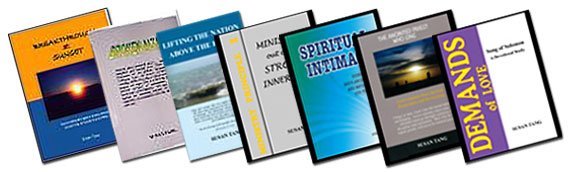
Her books include the following :-
Susan Tang heads The Station of Life, which is an Apostolic School of Renewal For Pastors, Missionaries and Lay Leaders. A Life Changing School That Will Bring You Back To God’s Ancient Ways and The Old Paths That Will Give You Rest. Jeremiah 6:16
Her books include the following :-
- Breakthrough at Sunset
- Broken Altars
- Lifting the nation above the “floods”.
- Ministry Principle 1&2
- The Anointed Priest Who Sins
- Demands of Love
- Spiritual Intimacy
The information about Rev Susan Tang is obtained from Wah Lok's Website which houses everything you want to know about Christian music and Christian Authors in Malaysia.
Click here for link to : Tabernacle Music
.
Saturday, June 6, 2009
Lessons from the General Motors Bankruptcy
Written by Steve Marr
Thursday, 04 June 2009
The bankruptcy of General Motors contains lessons for us all as GM has gone from being the dominant corporation in the world to the bottom of the heap. King Solomon taught, “Take my instruction, and not silver, and knowledge rather than the choicest gold” (Proverbs 8:10 NASB).
All bankruptcies are painful, and this has and will hit many people hard, but we can learn much from this tragic situation.
#1—Most change happens over a long period of time.
Absalom led a revolt against his father and forced King David to flee Jerusalem. To the casual observer, the revolt sprang up suddenly, but in reality Absalom had been working for a very long time to turn people against his father (See 2 Samuel 15:1-12). The hearts of many people were turned, one at a time, over several years.
The point is, when we see changes in our business environment, we need to take action. David could have restrained Absalom easily if he had taken action earlier, but he waited and ended up fighting a major battle later.
Over time, GM’s market share steadily declined. No single year or event shaped this trend. It was just a gradual decline, and relatively small changes were made: Saturn was introduced, foreign car makers were bought and sold, and a plunge into technology with the purchase of Hughes Electronics and EDS created excitement but never stemmed the decline in market share and sales.
Giles Bookstore had been in the same location for 30 years and earned a stable profit. However, over the past five years other businesses started moving away, which resulted in a steady decline in foot traffic and a corresponding decline in sales and profits. Joe Giles didn’t want to move. He tried more advertising, a store remodel, sale promotions, and sharper displays … but sales continued to decline. The fact was that the bookstore relied on foot traffic and foot traffic was just not there. Joe needed to invest in a new location that would gain an increase in traffic rather than continuing to invest in a location that was on its way down.
#2—We can easily be in denial.
Over the years as market share eroded little by little GM gave a lot of reasons, but denied the reality the continued market share loss needed to be fixed, not explained away each year. Late last year General Motors announced bankruptcy was not an option and would not happen, more denial.
Likewise, Giles Bookstore failed to grasp the reality that customers were moving away and that traffic was slowing down. The extra efforts helped a little bit, but it
was not enough to offset the customer decline. King Solomon asked, “How long will you fools fight the facts?” (Proverbs 1:22 NLT).
Both General Motors and Giles Bookstore failed to understand that far more radical change was needed. If either business truly grasped the facts of the declining business model over many years, far more radical action would have been taken.
#3—Deferring costs may hurt more than help.
General Motors agreed over the past half century to pay very generous retirement benefits to employees. In the early years this seemed like an easy way for the company to settle contract negotiations. The labor unions claimed the great benefits won and GM avoided paying out the money until a future date. However, the massive pension and healthcare costs became a legacy cost that would be a millstone around the company’s neck.
Giles Bookstore also started deferring expenses by not doing building maintenance, cutting back on inventory, and not upgrading their computer system. This created additional problems that made the bookstore even less efficient. Roof maintenance was ignored, causing major leak resulting in $75,000 worth of damages. All costs, whether paid today or in the future, are real and should be carefully considered.
The current challenging economy helped push GM and Giles Bookstore over the edge and into bankruptcy, but the events that forced bankruptcy could have been altered if management had acted earlier.
As a native Detroiter and recent GM vehicle purchaser, I take no delight in the misfortune of General Motors or its employees, retirees, shareholders, bondholders, and others who have lost a great deal. While management, government, the United Auto Workers and others share the responsibility for this failure we can learn key lessons from the tragic situation that apply to our businesses.
To read more articles by Steve Marr click here
Thursday, 04 June 2009
The bankruptcy of General Motors contains lessons for us all as GM has gone from being the dominant corporation in the world to the bottom of the heap. King Solomon taught, “Take my instruction, and not silver, and knowledge rather than the choicest gold” (Proverbs 8:10 NASB).
All bankruptcies are painful, and this has and will hit many people hard, but we can learn much from this tragic situation.
#1—Most change happens over a long period of time.
Absalom led a revolt against his father and forced King David to flee Jerusalem. To the casual observer, the revolt sprang up suddenly, but in reality Absalom had been working for a very long time to turn people against his father (See 2 Samuel 15:1-12). The hearts of many people were turned, one at a time, over several years.
The point is, when we see changes in our business environment, we need to take action. David could have restrained Absalom easily if he had taken action earlier, but he waited and ended up fighting a major battle later.
Over time, GM’s market share steadily declined. No single year or event shaped this trend. It was just a gradual decline, and relatively small changes were made: Saturn was introduced, foreign car makers were bought and sold, and a plunge into technology with the purchase of Hughes Electronics and EDS created excitement but never stemmed the decline in market share and sales.
Giles Bookstore had been in the same location for 30 years and earned a stable profit. However, over the past five years other businesses started moving away, which resulted in a steady decline in foot traffic and a corresponding decline in sales and profits. Joe Giles didn’t want to move. He tried more advertising, a store remodel, sale promotions, and sharper displays … but sales continued to decline. The fact was that the bookstore relied on foot traffic and foot traffic was just not there. Joe needed to invest in a new location that would gain an increase in traffic rather than continuing to invest in a location that was on its way down.
#2—We can easily be in denial.
Over the years as market share eroded little by little GM gave a lot of reasons, but denied the reality the continued market share loss needed to be fixed, not explained away each year. Late last year General Motors announced bankruptcy was not an option and would not happen, more denial.
Likewise, Giles Bookstore failed to grasp the reality that customers were moving away and that traffic was slowing down. The extra efforts helped a little bit, but it
was not enough to offset the customer decline. King Solomon asked, “How long will you fools fight the facts?” (Proverbs 1:22 NLT).
Both General Motors and Giles Bookstore failed to understand that far more radical change was needed. If either business truly grasped the facts of the declining business model over many years, far more radical action would have been taken.
#3—Deferring costs may hurt more than help.
General Motors agreed over the past half century to pay very generous retirement benefits to employees. In the early years this seemed like an easy way for the company to settle contract negotiations. The labor unions claimed the great benefits won and GM avoided paying out the money until a future date. However, the massive pension and healthcare costs became a legacy cost that would be a millstone around the company’s neck.
Giles Bookstore also started deferring expenses by not doing building maintenance, cutting back on inventory, and not upgrading their computer system. This created additional problems that made the bookstore even less efficient. Roof maintenance was ignored, causing major leak resulting in $75,000 worth of damages. All costs, whether paid today or in the future, are real and should be carefully considered.
The current challenging economy helped push GM and Giles Bookstore over the edge and into bankruptcy, but the events that forced bankruptcy could have been altered if management had acted earlier.
As a native Detroiter and recent GM vehicle purchaser, I take no delight in the misfortune of General Motors or its employees, retirees, shareholders, bondholders, and others who have lost a great deal. While management, government, the United Auto Workers and others share the responsibility for this failure we can learn key lessons from the tragic situation that apply to our businesses.
To read more articles by Steve Marr click here
Thursday, April 16, 2009
Integrating Christian Values in the Workplace
Dated : Monday, 08 October 2001
Written by Steve Marr
To read more : http://www.stevemarr.org
Many Christians struggle with three questions in the workplace. Is it right to try to integrate my faith with my job? If so, how can I incorporate Christian values and principles into a secular workplace? And can I be successful at my job and my Christian faith if I try to mix the two in the marketplace? Here's the good news: God's wisdom covers every aspect of our lives, including the marketplace. If we will utilize four key principles found in God's Word as the basis of our business decisions, they will form a solid and reliable framework for a successful enterprise.
The first principle is very simple: "Do for others what you would like them to do for you" (Matthew 7:12 NLT). On the job, we will interact with a variety of people: customers, suppliers, managers, and fellow employees. In every instance, we should put ourselves in the other person's shoes and act accordingly. If as a customer we expect to receive a quality product, friendly service, and a reasonable return policy, then we shouldn't treat our customers like the owner of a refurbished-computer store who once bragged to me that when the 30-day warranty ran out, he would "hang up the phone on any customer who demanded assistance, even if the warranty had expired by one day." Is that how he would want to be treated as a buyer?
The same principle applies to owners and managers when they interact with their employees. Thriving businesses are built on respect, reasonable work demands, and fair compensation. The best managers develop a 360-degree perspective when making decisions. They consider the effect on their customers, employees, other departments, and higher-level management. Regardless of your position, if you want to make fair and balanced decisions, don't forget to view the situation from the other person's perspective.
The second principle is to "give full measure" to your customers and employees. As Jesus said, "Give, and it will be given to you- good measure, pressed down, shaken together, running over.... For by your standard of measure it will be measured to you in return" (Luke 6:38 NASB). Giving your customers good value for their money is the secret to earning repeat business and referrals. In a restaurant, "good measure" means serving a full portion hot and fresh-and keeping those coffee cups and water glasses full. Your customers will be delighted, and they will tell their friends. Smart managers know that if a dinner sits on the warming tray too long the food becomes second rate. It's better to serve a fresh replacement than to hope the customer just won't complain. Absorbing the cost yourself, rather than asking your customer to suffer the consequences, will create future goodwill and repeat business.
The third principle to practice is "Do not judge according to appearance, but judge with righteous judgment" (John 7:24). At times we allow our emotions or personal perspective to color our thinking and govern our actions, but the Bible tells us to discover and discern the truth. Instead of jumping to conclusions, develop the habit of drawing out the facts and asking questions before you make decisions or take action. If an employee complains about the work of a colleague, for example, remember, "The first to plead his case seems just, until another comes and examines him" (Proverbs 18:17). Follow up, ask questions, and discover the truth before you respond. Apply the same principle to customer complaints and comments. Discover the truth, and then don't forget to treat your customers the way you would like to be treated. The best business decisions are made in the full light of the truth.
Finally, establish high standards of quality and focus your energy on consistent performance. The outcome of your efforts will be the basis on which your work is evaluated. As King Solomon wisely observed, "Wherever the tree falls, there it lies" (Ecclesiastes 11:3). Make sure that every product and every customer interaction conforms to a high standard of excellence. Work with diligence so that, at the end of the day, you can look at what you've done and echo God's assessment of His own creation: "It was very good" (Genesis 1:31). We will never attain to God's level of quality, but as Solomon advised, "Whatever your hand finds to do, verily, do it with all your might" (Ecclesiastes 9:10). Successful employees and businesses will develop a genuine enthusiasm for quality. I like the sign I saw posted on a company's shipping dock. It read, If you're not proud of each product, don't ship it." If you focus on quality, your customers and your company will be effectively served.
Integrating your faith with your job, and implementing godly principles in your business, will improve your results and make you a beacon in the marketplace.
******************************************************
Thank you for your interest, and desire to minister in His name. You are more than welcome to utilize any articles you believe would be useful.
In Christ,
Steve Marr
Joshua 1:8
Written by Steve Marr
To read more : http://www.stevemarr.org
Many Christians struggle with three questions in the workplace. Is it right to try to integrate my faith with my job? If so, how can I incorporate Christian values and principles into a secular workplace? And can I be successful at my job and my Christian faith if I try to mix the two in the marketplace? Here's the good news: God's wisdom covers every aspect of our lives, including the marketplace. If we will utilize four key principles found in God's Word as the basis of our business decisions, they will form a solid and reliable framework for a successful enterprise.
The first principle is very simple: "Do for others what you would like them to do for you" (Matthew 7:12 NLT). On the job, we will interact with a variety of people: customers, suppliers, managers, and fellow employees. In every instance, we should put ourselves in the other person's shoes and act accordingly. If as a customer we expect to receive a quality product, friendly service, and a reasonable return policy, then we shouldn't treat our customers like the owner of a refurbished-computer store who once bragged to me that when the 30-day warranty ran out, he would "hang up the phone on any customer who demanded assistance, even if the warranty had expired by one day." Is that how he would want to be treated as a buyer?
The same principle applies to owners and managers when they interact with their employees. Thriving businesses are built on respect, reasonable work demands, and fair compensation. The best managers develop a 360-degree perspective when making decisions. They consider the effect on their customers, employees, other departments, and higher-level management. Regardless of your position, if you want to make fair and balanced decisions, don't forget to view the situation from the other person's perspective.
The second principle is to "give full measure" to your customers and employees. As Jesus said, "Give, and it will be given to you- good measure, pressed down, shaken together, running over.... For by your standard of measure it will be measured to you in return" (Luke 6:38 NASB). Giving your customers good value for their money is the secret to earning repeat business and referrals. In a restaurant, "good measure" means serving a full portion hot and fresh-and keeping those coffee cups and water glasses full. Your customers will be delighted, and they will tell their friends. Smart managers know that if a dinner sits on the warming tray too long the food becomes second rate. It's better to serve a fresh replacement than to hope the customer just won't complain. Absorbing the cost yourself, rather than asking your customer to suffer the consequences, will create future goodwill and repeat business.
The third principle to practice is "Do not judge according to appearance, but judge with righteous judgment" (John 7:24). At times we allow our emotions or personal perspective to color our thinking and govern our actions, but the Bible tells us to discover and discern the truth. Instead of jumping to conclusions, develop the habit of drawing out the facts and asking questions before you make decisions or take action. If an employee complains about the work of a colleague, for example, remember, "The first to plead his case seems just, until another comes and examines him" (Proverbs 18:17). Follow up, ask questions, and discover the truth before you respond. Apply the same principle to customer complaints and comments. Discover the truth, and then don't forget to treat your customers the way you would like to be treated. The best business decisions are made in the full light of the truth.
Finally, establish high standards of quality and focus your energy on consistent performance. The outcome of your efforts will be the basis on which your work is evaluated. As King Solomon wisely observed, "Wherever the tree falls, there it lies" (Ecclesiastes 11:3). Make sure that every product and every customer interaction conforms to a high standard of excellence. Work with diligence so that, at the end of the day, you can look at what you've done and echo God's assessment of His own creation: "It was very good" (Genesis 1:31). We will never attain to God's level of quality, but as Solomon advised, "Whatever your hand finds to do, verily, do it with all your might" (Ecclesiastes 9:10). Successful employees and businesses will develop a genuine enthusiasm for quality. I like the sign I saw posted on a company's shipping dock. It read, If you're not proud of each product, don't ship it." If you focus on quality, your customers and your company will be effectively served.
Integrating your faith with your job, and implementing godly principles in your business, will improve your results and make you a beacon in the marketplace.
******************************************************
Thank you for your interest, and desire to minister in His name. You are more than welcome to utilize any articles you believe would be useful.
In Christ,
Steve Marr
Joshua 1:8
Thursday, October 23, 2008
Applying Faith... ...When Economic Fear Strikes
Tune in to any financial news broadcast, browse any newspaper, note the houses for sale on your own block, and scan your investments and retirement fund and you’ll find that bad news abounds. Fear can begin to grip us causing us to either freeze up and do nothing or make erratic, emotional and ultimately poor choices.
Avoiding Unhealthy Fear
The economic earthquake rocking America and the world is bringing great change to the financial landscape. Our choice as Christians is to turn to the Lord for wisdom and guidance rather than become slaves to fear.
According to Chad Moler there are 365 “fear not” references in the Bible, one for every day of the year. The Lord knew in turbulent times we would need constant reminders to place our trust in Him. Paul wrote, “For God did not give us a spirit of timidity, but a spirit of power, of love and self-discipline” (2 Timothy 1:7 NIV).
A key principle to remember when we experience fear is to differentiate between healthy fear and unhealthy fear. For example, I live in the State of Arizona in close proximity to mountain lions. In the unlikely event a mountain lion would stalk me, experiencing normal appropriate fear would allow me to take immediate action and get out of the way. Experiencing inappropriate fear would convince me to never go for a walk because I might get attacked by a mountain lion. Healthy appropriate fear prompts us to correct action, while unhealthy fear can paralyze us.
Steps for Creating a Faith Attitude
1. We need to turn to the Lord for wisdom, not the Wall Street “experts.” King Solomon wrote, “Trust in the Lord with all your heart and lean not on your own understanding; in all your ways acknowledge him, and he will make your path straight” (Proverbs 3:5-6 NIV). Trust is a choice. Since we choose to trust our spouse and choose to trust certain news sources, we can therefore choose to trust the Lord.
2. We must remember Scripture’s admonition, “Cast all your anxiety on him because he cares for you” (1 Peter 5:7 NIV). When we struggle with apprehension, our stomach churns and our heart flutters. Instead of allowing ourselves to be overwhelmed, we have the ability to cast all our care upon the Lord. Even if we struggle to release our fears, we can ask the Lord to remove them through prayer.
3. We need to ask for God’s peace and direction. James wrote, “If any of you lacks wisdom, he should ask God, who gives generously to all without finding fault” (James 1:5 NIV). In prayer ask the Lord to give you wisdom, direction and peace even when others are confused and fearful. Ask the Lord for the specific steps he would have you take. A specific direction from God in your circumstance will be far more powerful than any so-called “expert” advice.
4. When the pressure builds, we need to take hold of God’s promise as Paul expressed so well, “My God will meet all your needs” (Philippians 4:19 NIV). However, we must remember that while the Lord is faithful to provide all our needs, he has not promised to meet every desire we have.
Drought Comes to the Just and the Unjust
The Lord sent a drought to Israel and the Prophet Elijah suffered the consequences of that drought along with the remnant of the faithful who had never bowed to the false god Baal. Although Scripture demonstrates how the Lord provided for Elijah, (see 1 Kings 17) keeping Elijah alive by his direct intervention, Elijah was allowed to suffer during the drought. Likewise, in a brutal financial environment, the pain will be shared by the just and the unjust. The Lord will see us through this time of financial hardship but we must be prepared to experience a certain level of personal difficulty.
Setting Appropriate Action
First, because in our fast paced world facts can be elusive, we must take the appropriate amount of time to determine what the facts really are. The Lord can give us divine clarity to see and evaluate the real facts in a confusing situation. With the financial world presenting us with more and more talking heads with differing perspectives based on conflicting facts, only God can help us sort out the fact from the fiction.
Second, once we receive clarity, we need to take appropriate action without delay. As King Solomon wrote, “How long will you fools fight the facts?” (Proverbs 1:22 NLT). Whatever action the Lord impresses us to take; we need to act on that promptly.
The Lord has provided a pathway that moves us from fear to faith. As we make the choice to embrace the Lord and his wisdom, direction, and peace through faith, we become a shining light for the Lord. That light, even during the darkest economic times, is a light that can guide many to a relationship with Christ. Together may we all be Christ’s light in the current darkness.
---------------------------------------------------
AND DON’T FORGET, to subscribe to Steve Marr’s excellent daily email, go to either http://fcci.list-manage.com/track/click?u=e11b49cc8c6b0a21e41121611&id=30ae61a8bf&e=42ec33f976 or http://fcci.list-manage.com/track/click?u=e11b49cc8c6b0a21e41121611&id=4b5fd53060&e=42ec33f976.
Avoiding Unhealthy Fear
The economic earthquake rocking America and the world is bringing great change to the financial landscape. Our choice as Christians is to turn to the Lord for wisdom and guidance rather than become slaves to fear.
According to Chad Moler there are 365 “fear not” references in the Bible, one for every day of the year. The Lord knew in turbulent times we would need constant reminders to place our trust in Him. Paul wrote, “For God did not give us a spirit of timidity, but a spirit of power, of love and self-discipline” (2 Timothy 1:7 NIV).
A key principle to remember when we experience fear is to differentiate between healthy fear and unhealthy fear. For example, I live in the State of Arizona in close proximity to mountain lions. In the unlikely event a mountain lion would stalk me, experiencing normal appropriate fear would allow me to take immediate action and get out of the way. Experiencing inappropriate fear would convince me to never go for a walk because I might get attacked by a mountain lion. Healthy appropriate fear prompts us to correct action, while unhealthy fear can paralyze us.
Steps for Creating a Faith Attitude
1. We need to turn to the Lord for wisdom, not the Wall Street “experts.” King Solomon wrote, “Trust in the Lord with all your heart and lean not on your own understanding; in all your ways acknowledge him, and he will make your path straight” (Proverbs 3:5-6 NIV). Trust is a choice. Since we choose to trust our spouse and choose to trust certain news sources, we can therefore choose to trust the Lord.
2. We must remember Scripture’s admonition, “Cast all your anxiety on him because he cares for you” (1 Peter 5:7 NIV). When we struggle with apprehension, our stomach churns and our heart flutters. Instead of allowing ourselves to be overwhelmed, we have the ability to cast all our care upon the Lord. Even if we struggle to release our fears, we can ask the Lord to remove them through prayer.
3. We need to ask for God’s peace and direction. James wrote, “If any of you lacks wisdom, he should ask God, who gives generously to all without finding fault” (James 1:5 NIV). In prayer ask the Lord to give you wisdom, direction and peace even when others are confused and fearful. Ask the Lord for the specific steps he would have you take. A specific direction from God in your circumstance will be far more powerful than any so-called “expert” advice.
4. When the pressure builds, we need to take hold of God’s promise as Paul expressed so well, “My God will meet all your needs” (Philippians 4:19 NIV). However, we must remember that while the Lord is faithful to provide all our needs, he has not promised to meet every desire we have.
Drought Comes to the Just and the Unjust
The Lord sent a drought to Israel and the Prophet Elijah suffered the consequences of that drought along with the remnant of the faithful who had never bowed to the false god Baal. Although Scripture demonstrates how the Lord provided for Elijah, (see 1 Kings 17) keeping Elijah alive by his direct intervention, Elijah was allowed to suffer during the drought. Likewise, in a brutal financial environment, the pain will be shared by the just and the unjust. The Lord will see us through this time of financial hardship but we must be prepared to experience a certain level of personal difficulty.
Setting Appropriate Action
First, because in our fast paced world facts can be elusive, we must take the appropriate amount of time to determine what the facts really are. The Lord can give us divine clarity to see and evaluate the real facts in a confusing situation. With the financial world presenting us with more and more talking heads with differing perspectives based on conflicting facts, only God can help us sort out the fact from the fiction.
Second, once we receive clarity, we need to take appropriate action without delay. As King Solomon wrote, “How long will you fools fight the facts?” (Proverbs 1:22 NLT). Whatever action the Lord impresses us to take; we need to act on that promptly.
The Lord has provided a pathway that moves us from fear to faith. As we make the choice to embrace the Lord and his wisdom, direction, and peace through faith, we become a shining light for the Lord. That light, even during the darkest economic times, is a light that can guide many to a relationship with Christ. Together may we all be Christ’s light in the current darkness.
---------------------------------------------------
AND DON’T FORGET, to subscribe to Steve Marr’s excellent daily email, go to either http://fcci.list-manage.com/track/click?u=e11b49cc8c6b0a21e41121611&id=30ae61a8bf&e=42ec33f976 or http://fcci.list-manage.com/track/click?u=e11b49cc8c6b0a21e41121611&id=4b5fd53060&e=42ec33f976.
Sunday, October 19, 2008
CEO's Emergency Checklist
Answering the Call
...With a CEO’s Emergency Checklist
As we continue to address the current challenges we are facing globally, we promised a checklist to be used as a tool for each of us to plan and move ahead with intentionality - ensuring that we both respond effectively to the situation, and leverage this opportunity for maximum Kingdom impact. Here is a list for CEO/Owners and senior executives as we chart the course for our companies (can you tell there were pilots in the room?).
Oh, yes, and even though I too often cringe when I hear these words from James, nevertheless, the principle is too important not keep on our screen – especially since “The joy of the Lord” is our strength, and it is that joy that will draw others to ask why we are different at times like this.
“Consider it all joy, my brethren, when you encounter various trials, knowing that the testing of your faith produces endurance. And let endurance have its perfect result, so that you may be perfect and complete, lacking in nothing. But if any of you lacks wisdom, let him ask of God, who gives to all generously and without reproach, and it will be given to him.” (James 1:2-4 NASB)
Expectantly in Christ,
Doug
Doug Hunter
President and CEO
Fellowship of Companies for Christ International / Christ@Work
You don't waste your life by where you work, but by how and why. John Piper (Click on the table to enlarge)
Thursday, October 9, 2008
Heavy Cross?


Whatever your cross,
Whatever your pain,
There will always be sunshine,
After the rain...
Perhaps you may stumble,
Perhaps even fall,
But God's always ready,
To answer your call...
He knows every heartache,
Sees every tear,
A word from His lips,
Can calm every fear...
Your sorrows may linger,
Throughout the night,
But suddenly vanish,
In dawn's early light...
The Savior is waiting,
Somewhere above,
To give you His grace,
And send you His love...
Whatever your cross,
Whatever your pain,
'God always sends rainbows...
After the rain...'
To get out of difficulty, one must usually go through it!
Thursday, September 25, 2008
Servants Maintain a Low Profile by Rick Warren
2008/09/23
Servants Maintain a Low Profile by Rick Warren
And all of you must put on the apron of humility, to serve one another; for the scripture says, “God resists the proud, but shows favor to the humble.” 1 Peter 5:5 (TEV)
*** *** *** ***
Real servants maintain a low profile. Servants don’t promote or call attention to themselves. Instead of acting to impress and dressing for success, they “put on the apron of humility, to serve one another” (1 Peter 5:5 TEV).
If recognized for their service, they humbly accept it but don’t allow notoriety to distract them from their work. Paul exposed a kind of service that appears to be spiritual but is really just a put-on, a show, an act to get attention. He called it “eyeservice,” serving in order to impress people with how spiritual we are (Ephesians 6:6 KJV; Colossians 3:22 KJV).
This was a sin of the Pharisees. They turned helping others, giving, and even prayer into a performance for others. Jesus hated this attitude and warned, “When you do good deeds, don’t try to show off. If you do, you won’t get a reward from your Father in heaven” (Matthew 6:1 CEV).
Self-promotion and servanthood don’t mix. Real servants don’t serve for the approval or applause of others. They live for an audience of One. As Paul said, “If I were still trying to please men, I would not be a servant of Christ” (Galatians 1:10 NIV).
You won’t find many real servants in the limelight; in fact, they avoid it whenever possible. They are content with quietly serving in the shadows.
Joseph is a great example. He didn’t draw attention to himself, but quietly served Potiphar, then his jailer, then Pharaoh’s baker and wine taster, and God blessed that attitude. When Pharaoh promoted him to prominence, Joseph still maintained a servant’s heart, even with his brothers, who had betrayed him.
Unfortunately, many leaders today start off as servants but end up as celebrities. They become addicted to attention, unaware that always being in the spotlight blinds you.
You may be serving in obscurity in some small place, feeling unknown and unappreciated. Listen: God put you where you are for a purpose! He has every hair on your head numbered, and he knows your address.
© 2008 Purpose Driven Life. All rights reserved. Rick Warren is the founding pastor of Saddleback Church in Lake Forest, Calif., one of America's largest and best-known churches. In addition, Rick is author of the New York Times bestseller The Purpose Driven Life and The Purpose Driven Church, which was named one of the 100 Christian books that changed the 20th Century. He is also founder of Pastors.com, a global Internet community for ministers. Pastor Jon Walker is a writer for
www.GraceCreates.com.
-->
Servants Maintain a Low Profile by Rick Warren
And all of you must put on the apron of humility, to serve one another; for the scripture says, “God resists the proud, but shows favor to the humble.” 1 Peter 5:5 (TEV)
*** *** *** ***
Real servants maintain a low profile. Servants don’t promote or call attention to themselves. Instead of acting to impress and dressing for success, they “put on the apron of humility, to serve one another” (1 Peter 5:5 TEV).
If recognized for their service, they humbly accept it but don’t allow notoriety to distract them from their work. Paul exposed a kind of service that appears to be spiritual but is really just a put-on, a show, an act to get attention. He called it “eyeservice,” serving in order to impress people with how spiritual we are (Ephesians 6:6 KJV; Colossians 3:22 KJV).
This was a sin of the Pharisees. They turned helping others, giving, and even prayer into a performance for others. Jesus hated this attitude and warned, “When you do good deeds, don’t try to show off. If you do, you won’t get a reward from your Father in heaven” (Matthew 6:1 CEV).
Self-promotion and servanthood don’t mix. Real servants don’t serve for the approval or applause of others. They live for an audience of One. As Paul said, “If I were still trying to please men, I would not be a servant of Christ” (Galatians 1:10 NIV).
You won’t find many real servants in the limelight; in fact, they avoid it whenever possible. They are content with quietly serving in the shadows.
Joseph is a great example. He didn’t draw attention to himself, but quietly served Potiphar, then his jailer, then Pharaoh’s baker and wine taster, and God blessed that attitude. When Pharaoh promoted him to prominence, Joseph still maintained a servant’s heart, even with his brothers, who had betrayed him.
Unfortunately, many leaders today start off as servants but end up as celebrities. They become addicted to attention, unaware that always being in the spotlight blinds you.
You may be serving in obscurity in some small place, feeling unknown and unappreciated. Listen: God put you where you are for a purpose! He has every hair on your head numbered, and he knows your address.
© 2008 Purpose Driven Life. All rights reserved. Rick Warren is the founding pastor of Saddleback Church in Lake Forest, Calif., one of America's largest and best-known churches. In addition, Rick is author of the New York Times bestseller The Purpose Driven Life and The Purpose Driven Church, which was named one of the 100 Christian books that changed the 20th Century. He is also founder of Pastors.com, a global Internet community for ministers. Pastor Jon Walker is a writer for
www.GraceCreates.com.
-->
Tuesday, September 16, 2008
We Serve God by Serving Others by Rick Warren
Subject: Permission to publish your daily devotions on our blog.
Dear Pastor Rick Warren,
We are writing to ask your permission to publish your daily devotion which we receive in our email.We find your devotion today, "We Serve God by Serving Others" most relevant to what we are facing today in our life.
Thank you and God Bless.
----- Original Message -----
From: "Purpose Driven Life Customer Care" <devotional@purposedrivenlife.com>
To:
Sent: Monday, September 15, 2008 2:10 PM
Subject: RE: Permission to publish your daily devotions on our blog. (#8262-111489602-6623)
Greetings,
Thank you for your integrity on checking about that. Yes, you have permission to use all of or part of the Daily Devotional so long as you give credit to the author and refer your members to the Purpose Driven Life website at> http://www.purposedrivenlife.com/en-US/FreeTools/devotional/dailyDevotional.htm
where they can view additional issues of the daily devotional. Blessings, Purpose Driven Life Customer Care
*********************************************************************************
2008/09/15
We Serve God by Serving Others by Rick Warren
Whoever wants to be great must become a servant. Mark 10:43 (MSG)
*** *** *** ***
We serve God by serving others.
The world defines greatness in terms of power, possessions, prestige, and position. If you can demand service from others, you’ve arrived. In our self-serving culture with its me-first mentality, acting like a servant is not a popular concept.
Jesus, however, measured greatness in terms of service, not status. God determines your greatness by how many people you serve, not how many people serve you.
This is so contrary to the world’s idea of greatness that we have a hard time understanding it, much less practicing it. The disciples argued about who deserved the most prominent position, and 2,000 years later, Christian leaders still jockey for position and prominence in churches, denominations, and parachurch ministries.
Thousands of books have been written on leadership, but few on servanthood. Everyone wants to lead; no one wants to be a servant. We would rather be generals than privates. Even Christians want to be “servant-leaders,” not just plain servants. But to be like Jesus is to be a servant. That’s what he called himself.
While knowing your shape is important for serving God, having the heart of a servant is even more important. Remember, God shaped you for service, not for self-centeredness. Without a servant’s heart, you will be tempted to misuse your shape for personal gain. You will also be tempted to use it as an excuse to exempt yourself from meeting some needs.
God often tests our hearts by asking us to serve in ways we’re not shaped. If you see a man fall into a ditch, God expects you to help him out, not say, “I don’t have the gift of mercy or service.”
While you may not be gifted a particular task, you may be called to do it if no one who is gifted at it is around. Your primary ministry should be in the area of your shape, but your secondary service is wherever you’re needed at the moment.
Your shape reveals your ministry, but your servant’s heart will reveal your maturity. No special talent or gift is required to stay after a meeting to pick up trash or stack chairs. Anyone can be a servant. All it requires is character.
It is possible to serve in church for a lifetime without ever being a servant. You must have a servant’s heart.
How can you know if you have the heart of a servant?
Jesus said, “You can tell what they are by what they do” (Matthew 7:16 CEV).
© 2008 Purpose Driven Life. All rights reserved. Rick Warren is the founding pastor of Saddleback Church in Lake Forest, Calif., one of America's largest and best-known churches. In addition, Rick is author of the New York Times bestseller The Purpose Driven Life and The Purpose Driven Church, which was named one of the 100 Christian books that changed the 20th Century. He is also founder of Pastors.com, a global Internet community for ministers. Pastor Jon Walker is a writer for
http://www.gracecreates.com/.
-->
Click HERE for a free subscription to The Purpose Driven Life Daily Devotional, your daily inspiration via email. Missed out on one of the Daily Devotionals? Click here to view the online archives.
Dear Pastor Rick Warren,
We are writing to ask your permission to publish your daily devotion which we receive in our email.We find your devotion today, "We Serve God by Serving Others" most relevant to what we are facing today in our life.
Thank you and God Bless.
----- Original Message -----
From: "Purpose Driven Life Customer Care" <devotional@purposedrivenlife.com>
To:
Sent: Monday, September 15, 2008 2:10 PM
Subject: RE: Permission to publish your daily devotions on our blog. (#8262-111489602-6623)
Greetings,
Thank you for your integrity on checking about that. Yes, you have permission to use all of or part of the Daily Devotional so long as you give credit to the author and refer your members to the Purpose Driven Life website at> http://www.purposedrivenlife.com/en-US/FreeTools/devotional/dailyDevotional.htm
where they can view additional issues of the daily devotional. Blessings, Purpose Driven Life Customer Care
*********************************************************************************
2008/09/15
We Serve God by Serving Others by Rick Warren
Whoever wants to be great must become a servant. Mark 10:43 (MSG)
*** *** *** ***
We serve God by serving others.
The world defines greatness in terms of power, possessions, prestige, and position. If you can demand service from others, you’ve arrived. In our self-serving culture with its me-first mentality, acting like a servant is not a popular concept.
Jesus, however, measured greatness in terms of service, not status. God determines your greatness by how many people you serve, not how many people serve you.
This is so contrary to the world’s idea of greatness that we have a hard time understanding it, much less practicing it. The disciples argued about who deserved the most prominent position, and 2,000 years later, Christian leaders still jockey for position and prominence in churches, denominations, and parachurch ministries.
Thousands of books have been written on leadership, but few on servanthood. Everyone wants to lead; no one wants to be a servant. We would rather be generals than privates. Even Christians want to be “servant-leaders,” not just plain servants. But to be like Jesus is to be a servant. That’s what he called himself.
While knowing your shape is important for serving God, having the heart of a servant is even more important. Remember, God shaped you for service, not for self-centeredness. Without a servant’s heart, you will be tempted to misuse your shape for personal gain. You will also be tempted to use it as an excuse to exempt yourself from meeting some needs.
God often tests our hearts by asking us to serve in ways we’re not shaped. If you see a man fall into a ditch, God expects you to help him out, not say, “I don’t have the gift of mercy or service.”
While you may not be gifted a particular task, you may be called to do it if no one who is gifted at it is around. Your primary ministry should be in the area of your shape, but your secondary service is wherever you’re needed at the moment.
Your shape reveals your ministry, but your servant’s heart will reveal your maturity. No special talent or gift is required to stay after a meeting to pick up trash or stack chairs. Anyone can be a servant. All it requires is character.
It is possible to serve in church for a lifetime without ever being a servant. You must have a servant’s heart.
How can you know if you have the heart of a servant?
Jesus said, “You can tell what they are by what they do” (Matthew 7:16 CEV).
© 2008 Purpose Driven Life. All rights reserved. Rick Warren is the founding pastor of Saddleback Church in Lake Forest, Calif., one of America's largest and best-known churches. In addition, Rick is author of the New York Times bestseller The Purpose Driven Life and The Purpose Driven Church, which was named one of the 100 Christian books that changed the 20th Century. He is also founder of Pastors.com, a global Internet community for ministers. Pastor Jon Walker is a writer for
http://www.gracecreates.com/.
-->
Click HERE for a free subscription to The Purpose Driven Life Daily Devotional, your daily inspiration via email. Missed out on one of the Daily Devotionals? Click here to view the online archives.
Subscribe to:
Posts (Atom)


 Posts
Posts

